
cozycorner
Date
Role
& UX Designer
The problem
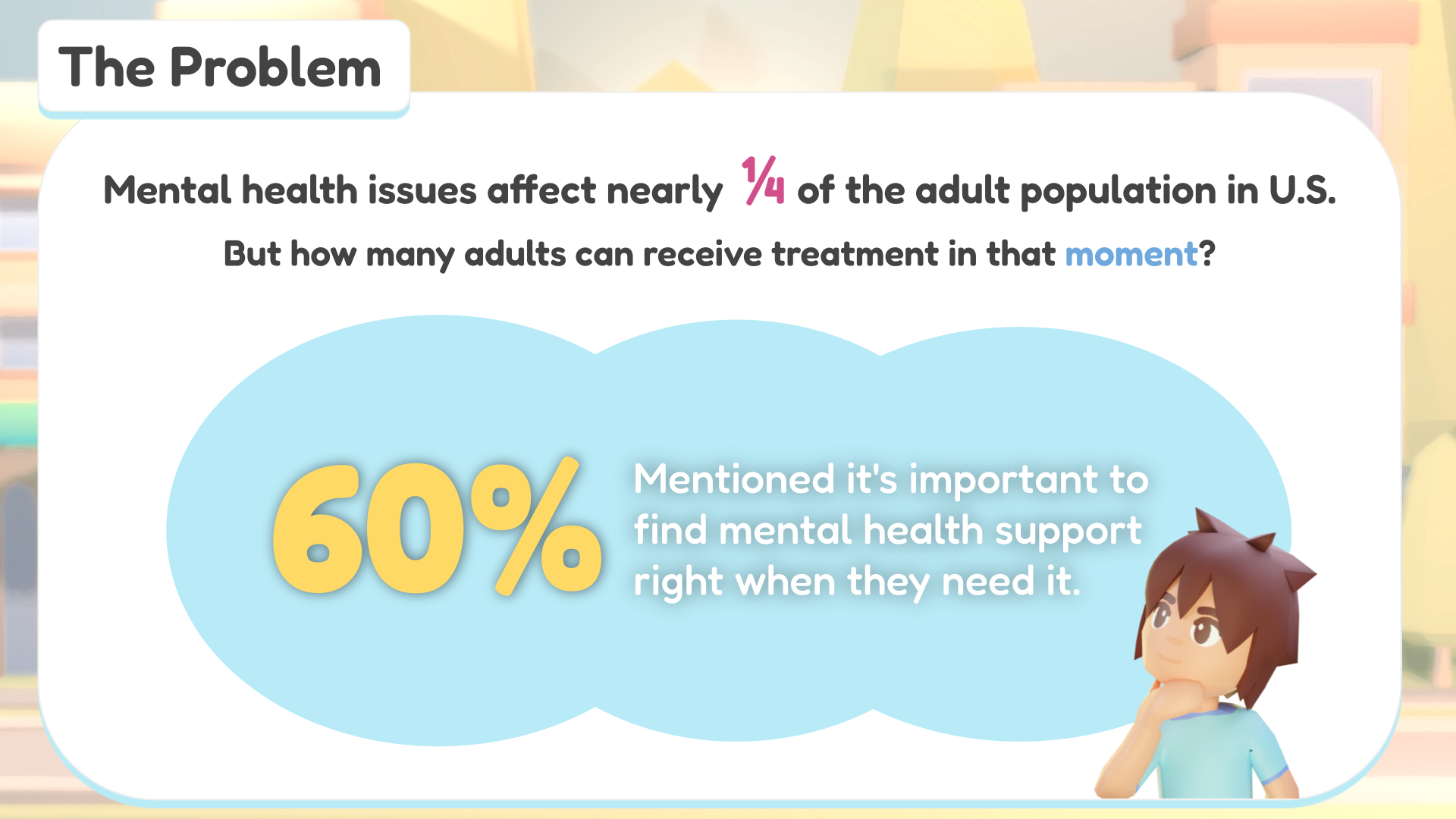
Some of the hardest mental health moments happen quietly and unexpectedly. This could be when a wave of anxiety hits before a big deadline, or that heavy feeling after a long day at work. These are the moments when people need support most, but help isn’t always within reach.
Despite 1 in 4 adults facing a mental health challenge each year, there remains a gap between understanding the importance of mental health and being able to access support right when it's needed. In our survey, 60% of respondents reported wishing they had tools available exactly during these “critical moments” that shape their emotional well-being.
Research Question
Main Research Question:
How might a gamified digital therapy support young adults’ mental health when traditional help is inaccessible?
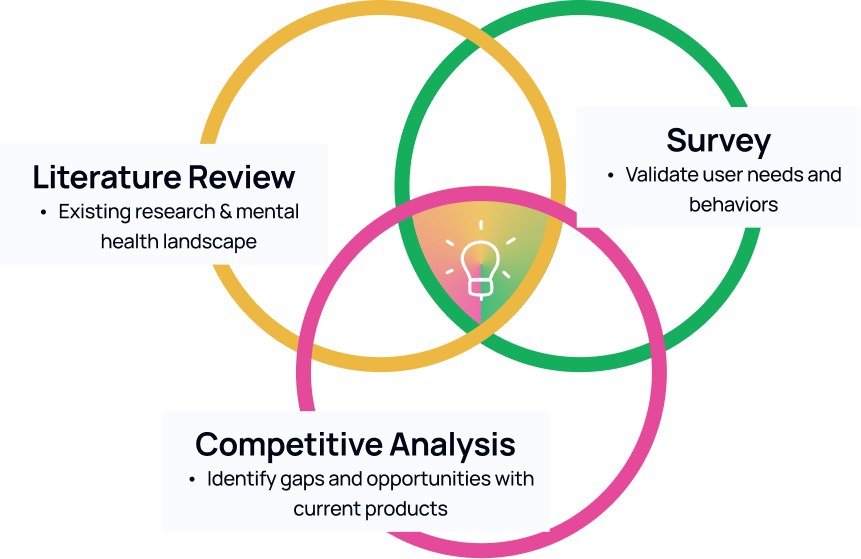
To guide our research and develop our user survey, we broke our main research question into three key questions:
What barriers do young adults face when trying to access immediate mental health support?
How can digital tools help support emotional well-being during critical moments?
How might we design a gamified therapy platform that makes mental health support more accessible and engaging?
Research Methods
key user pain points
We surveyed young adults—including both college students and non-students—to understand their emotional needs and the challenges they face with traditional mental health support. From these responses, four key pain points emerged:
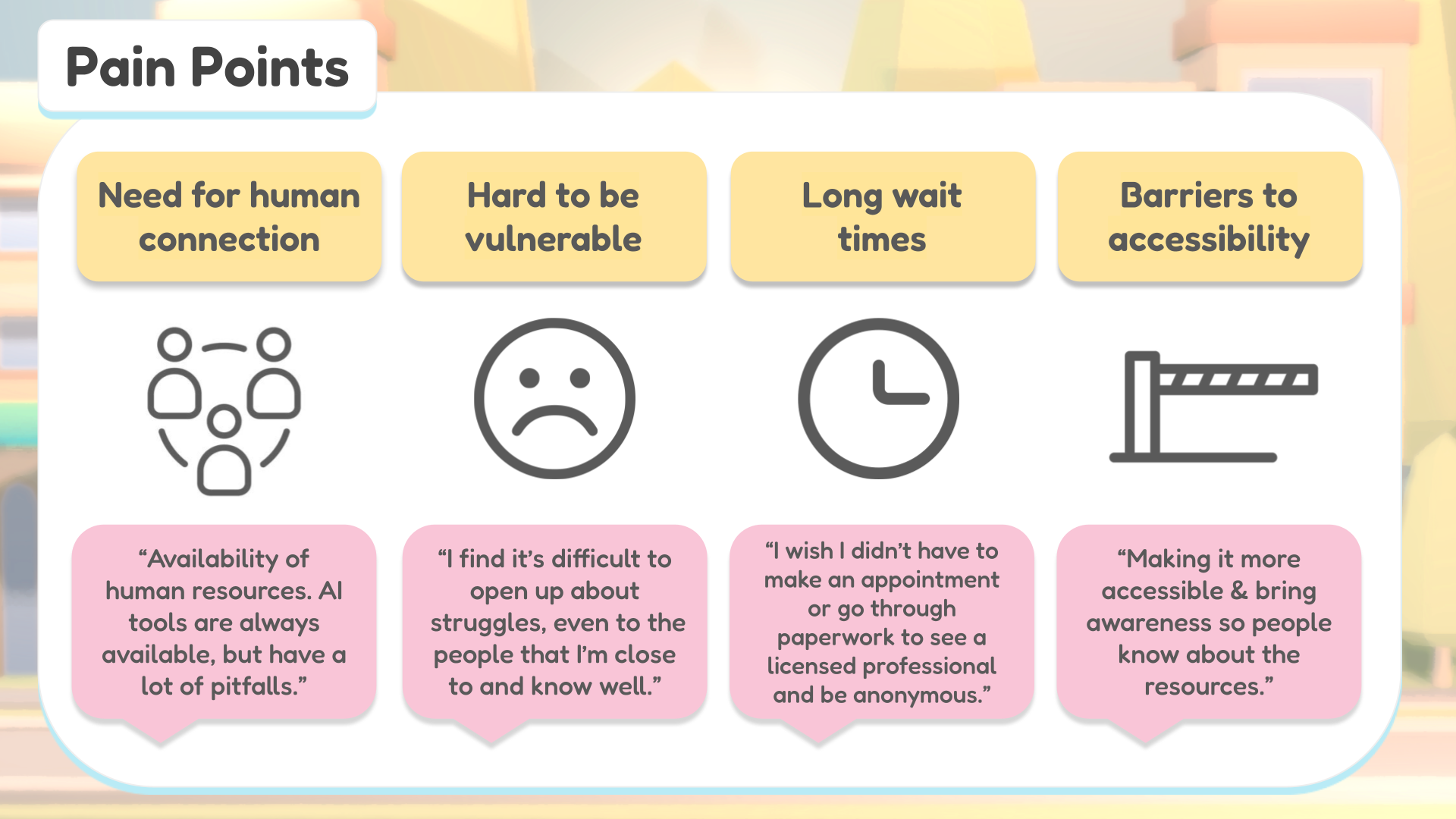
1. Need for Human Connection
Many participants expressed craving genuine human interaction when seeking support. With the rise of AI chatbots and the growing loneliness epidemic, people increasingly want conversation that feels real, empathetic, and human.
2. Difficulty Being Vulnerable
Opening up about personal struggles feels intimidating. Respondents shared fears of being judged, even by close friends or family, which makes asking for help or expressing emotions much harder.
3. Long Wait Times for Therapy
Even for those who are ready to seek help may face discouraging delays. Finding a therapist, navigating insurance, and completing intake processes can take weeks or months, leaving individuals unsupported during their most critical moments.
4. Barriers to Accessibility
Many individuals just don’t know where to start. The abundance of scattered mental health resources feels overwhelming, while logistical barriers (cost, transportation, scheduling) make accessing professional care even more challenging.
Opportunity areas
Immediate support during critical moments
Many existing mental health platforms focus on long-term therapy programs rather than providing support when users need it most. This revealed an opportunity to design tools that offer immediate guidance during moments of emotional distress.
Emotional safety and anonymity
Both competitor analysis and user responses highlighted the importance of privacy when discussing mental health. Designing for anonymity can help users feel safer expressing vulnerable emotions without fear of judgment.
Supporting underserved young adults
Many young adults reported difficulty accessing traditional therapy due to cost, long wait times, or uncertainty about where to start. This created an opportunity to design a platform that lowers barriers and provides accessible support tailored to this population.
the solution
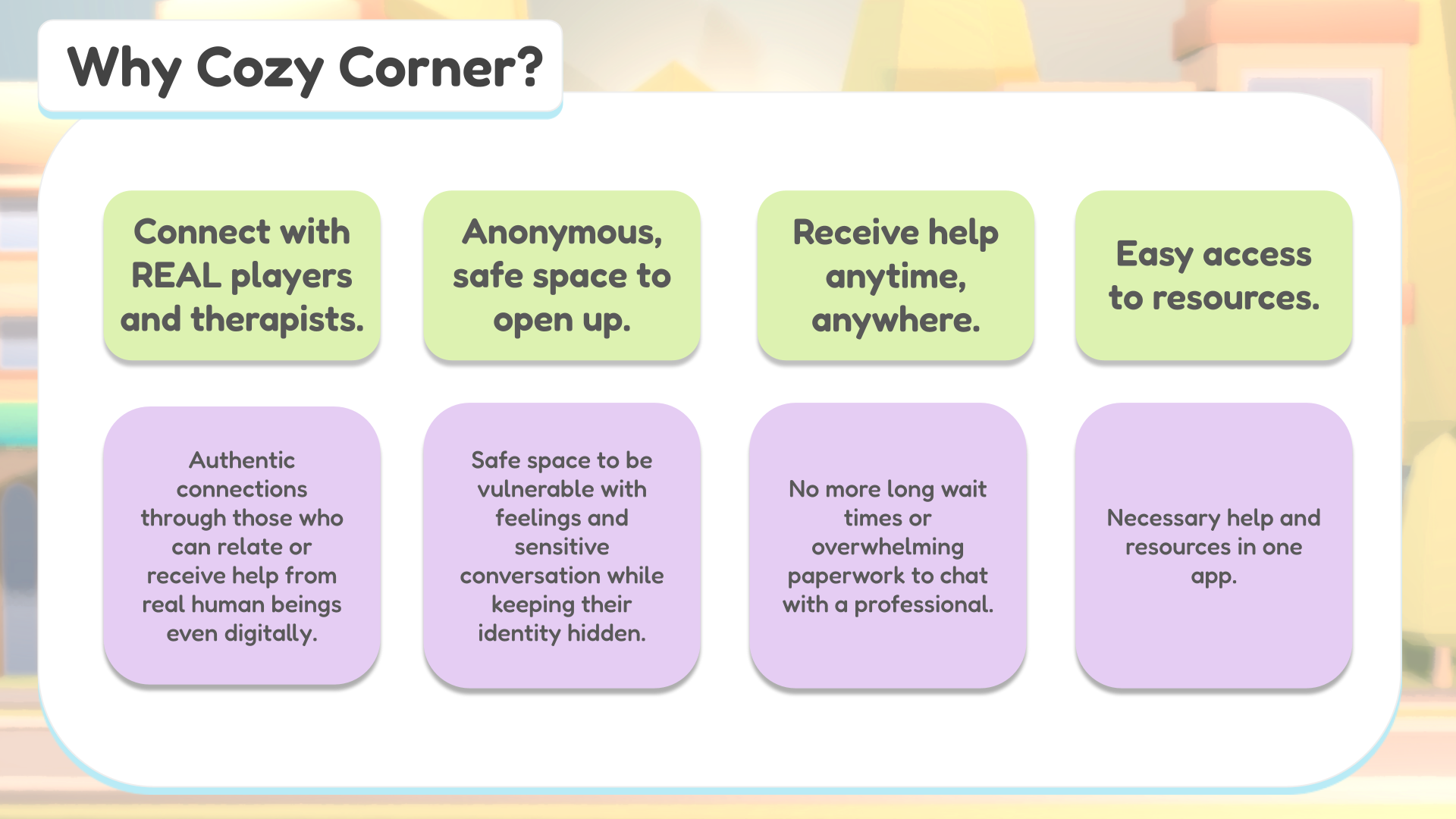
Cozy Corner blends the comfort of gaming environments with the accessibility of digital mental health tools. Users can explore interactive space where they can connect with others, access curated resources, and receive support when they need it most.
Within the app, users have the option to chat with verified mental health professionals who provide quick and confidential counseling during moments of stress, anxiety, or emotional overwhelm. Support becomes accessible anytime without long waitlists, complicated logistics, or intimidating first steps of traditional therapy.
Cozy Corner organizes emotional tools, community spaces, and real-time assistance into one intuitive platform designed to meet users exact needs. Whether they’re looking for grounding exercises, human connection, or immediate guidance, Cozy Corner offers a safe and comforting space just few taps away.
Style Guide
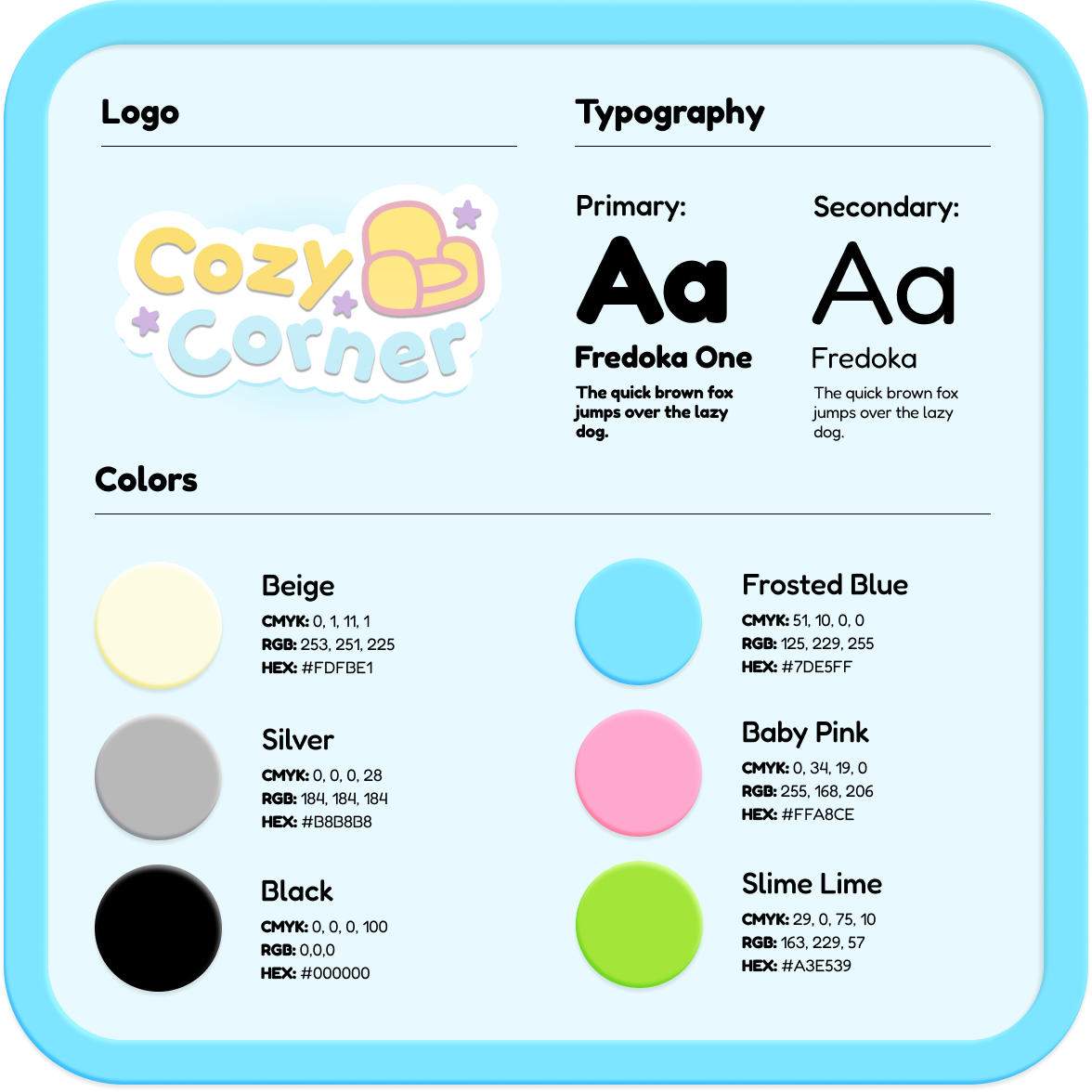
Logo
The Cozy Corner logo features a couch and a star to represent comfort, safety, and emotional support. We chose a couch as the primary symbol because it embodies the feeling of a cozy corner—a familiar place where people can relax, unwind, and engage in comforting activities like reading or playing video games. Much like a comfortable couch by a window, the app is designed to serve as a supportive space that users can return to whenever they need a moment of calm.The star element adds a sense of warmth and gentle guidance, reinforcing the idea that Cozy Corner is a safe place users can rely on when seeking emotional comfort and support.
Typography
We selected Fredoka and Fredoka One to create a friendly, playful tone that reflects the app’s video game–inspired experience. The rounded letterforms help the interface feel approachable while still maintaining readability, which is especially important during moments when users may feel emotionally overwhelmed.
Colors
We chose pastel colors as the primary palette for Cozy Corner’s interface and visual identity. Soft pastel tones help reduce visual stress on the eyes while creating a calm and comforting atmosphere. At the same time, these colors evoke gentle optimism, supporting the app’s goal of providing a safe and uplifting environment for users.
navigation flow
The Home Ecosystem serves as both the user’s main dashboard and their avatar’s literal in-game home. It’s the central hub that ties every feature together, and the navigation flow is designed to feel intuitive, comforting, and user-led.
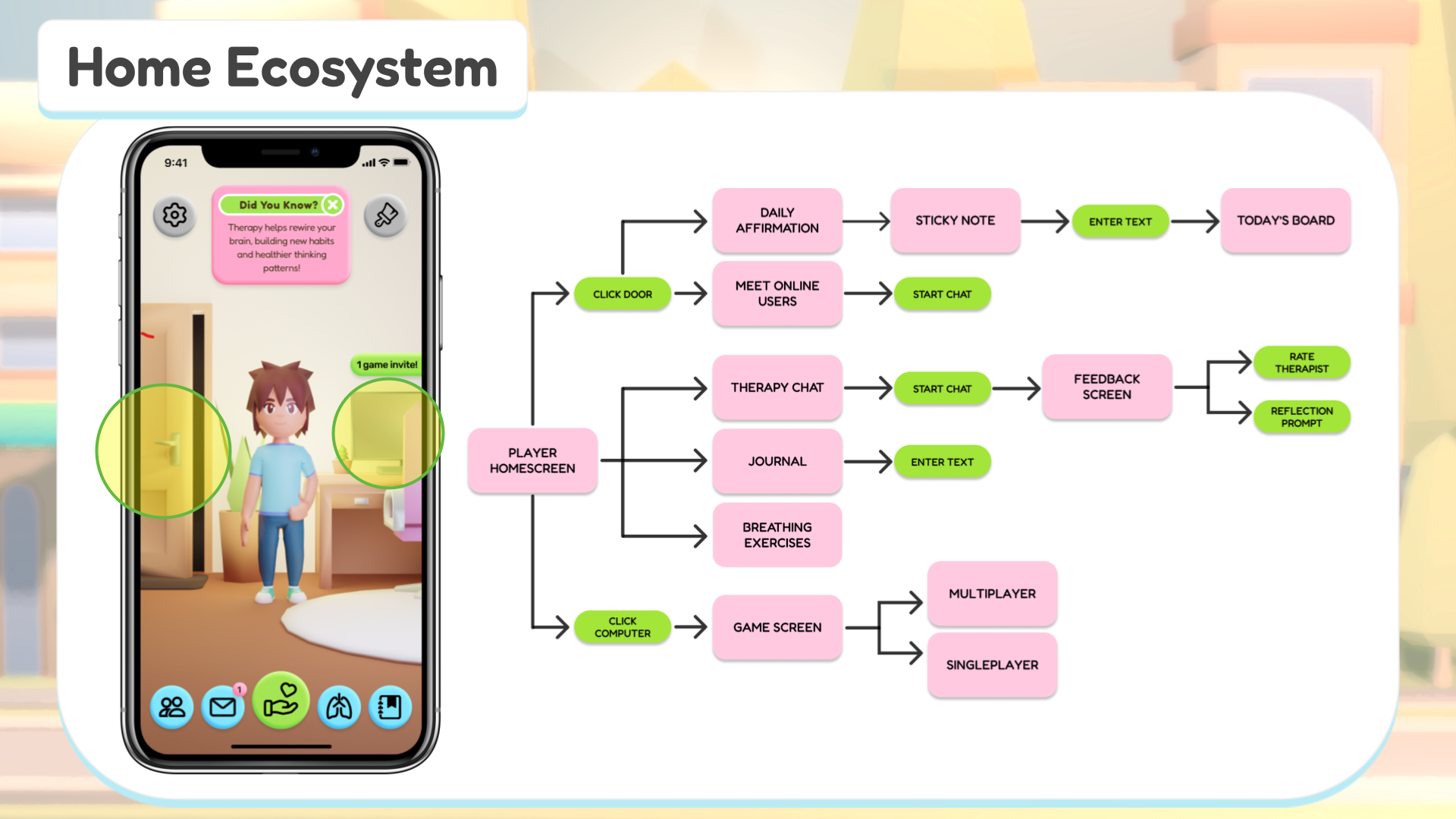
From the bottom navigation bar, users can access key wellness features such as therapy sessions, journaling, breathing exercises, their mailbox, and friends list. Each tool is only one tap away, reducing friction in moments when emotional support is urgently needed.
Interactions within the room are also meaningful:
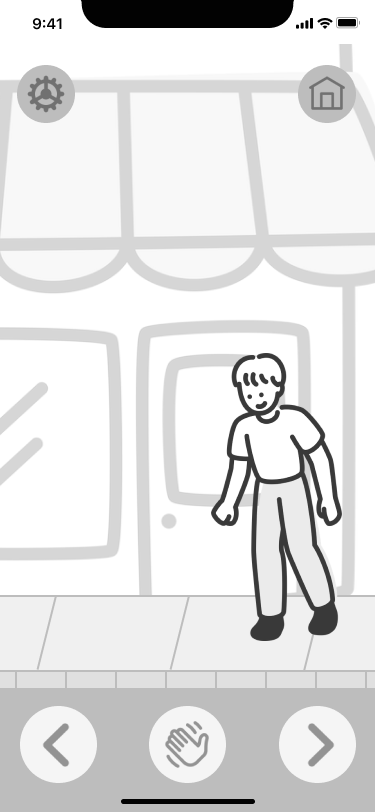
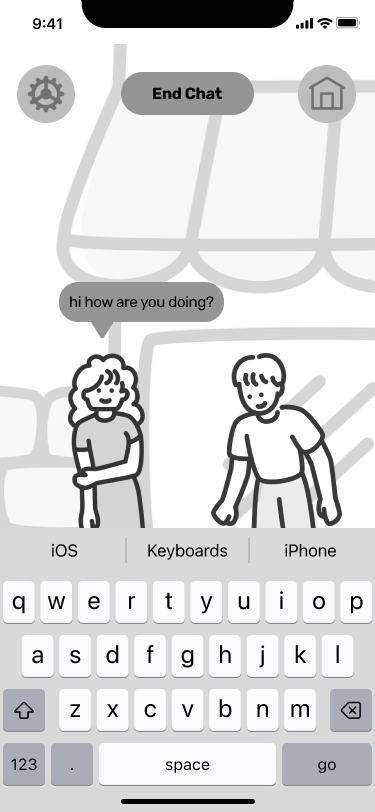
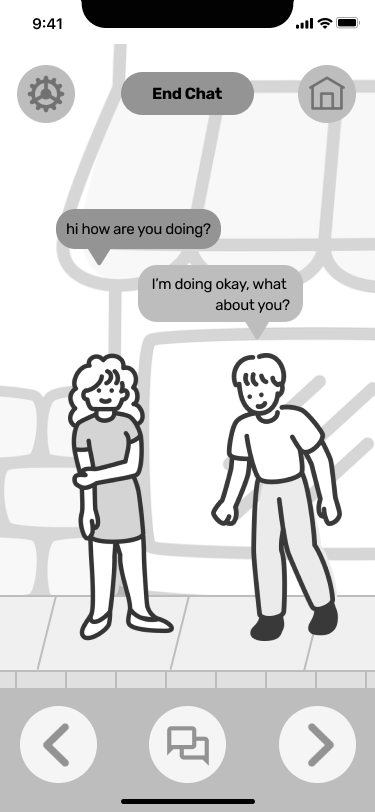
🚪Clicking the door takes users outside into a shared social space where they can meet and connect with other online players.
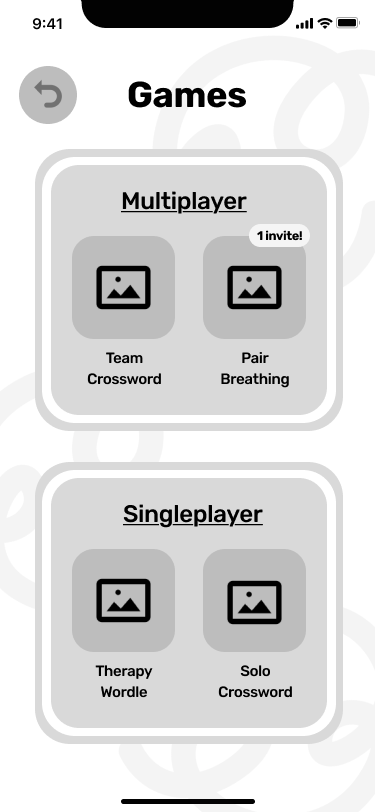
💻Using the computer opens the mini-game menu, offering grounding, relaxation, or cognitive-based mental health activities.
This design makes the “home” a literal and emotional safe space—where users can recharge privately—and stepping outside becomes an intentional choice to socialize or seek connection when they feel ready.
midfi wireframe
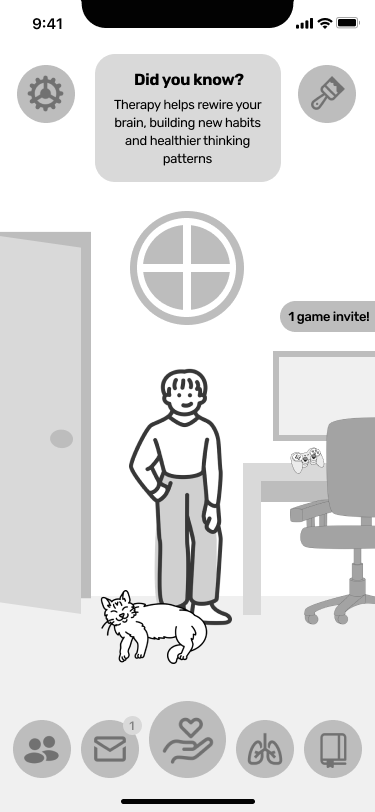
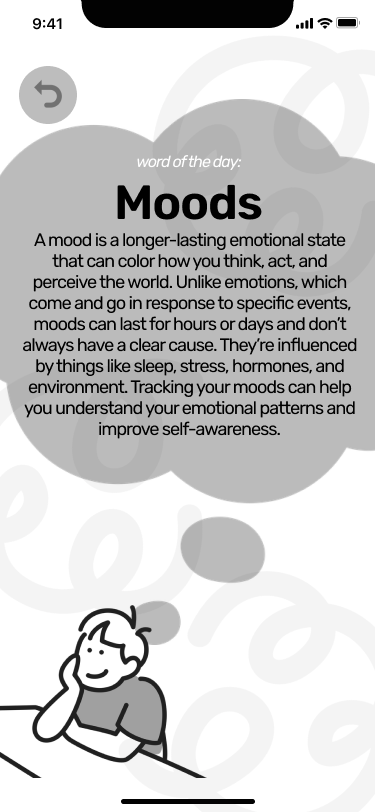
To bring the Home Ecosystem to life, we created mid-fidelity wireframes that mapped out each interaction and validated whether the flow supported users in moments of stress or overwhelm.
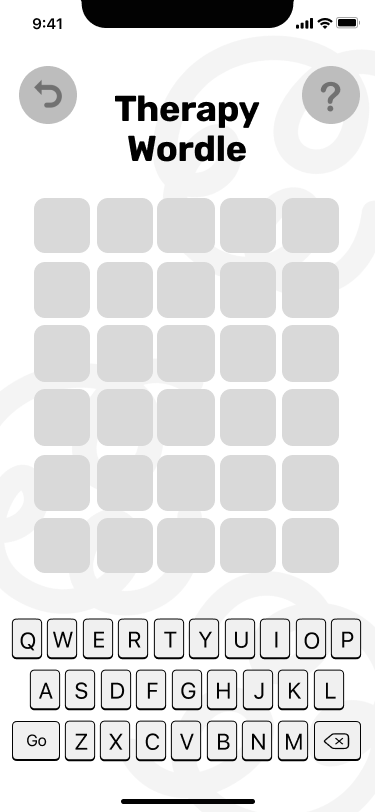
Home Ecosystem + Therapy Wordle

initating a chat in social space
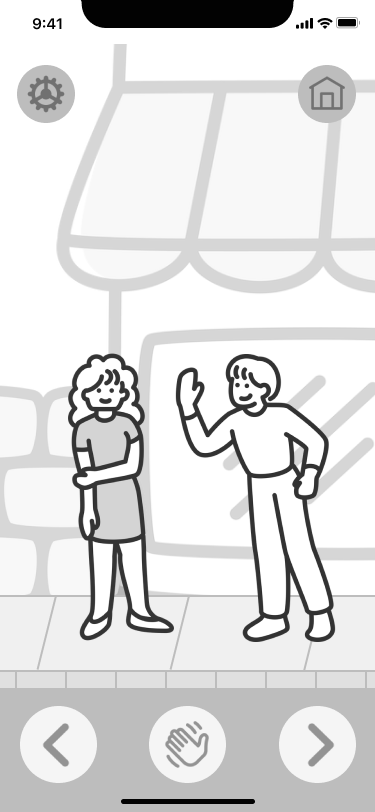
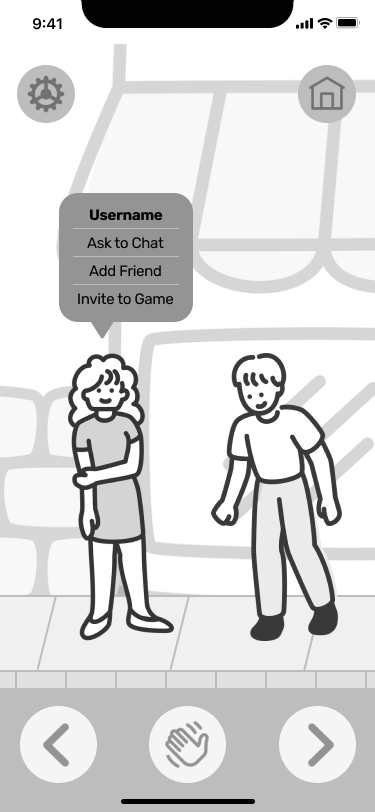
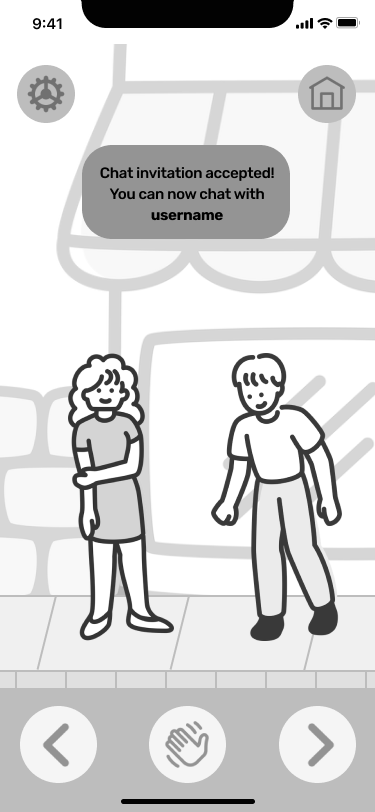
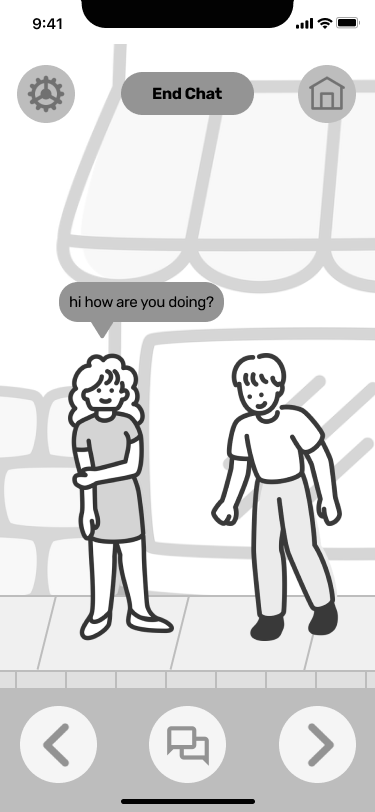
hifi wireframe
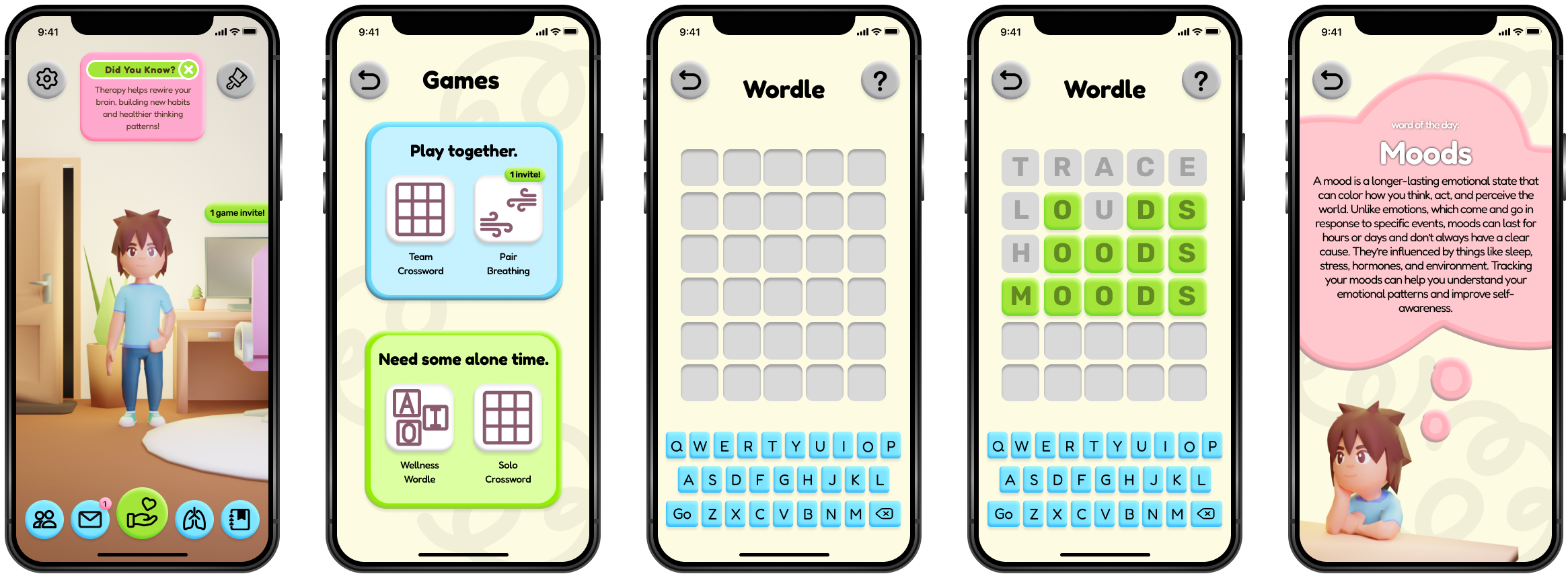
We developed a high-fidelity wireframe for our core feature Wellness Wordle mini-game to visualize the emotional tone of Cozy Corner. This design illustrates how comforting and familiar gameplay can reinforce positive affirmations and mental health vocabulary. The hi-fi also serves as an early look at the playful and cozy aesthetic that guides the rest of the platform.
minigame prototype
We then turned our Wellness Wordle mini-game into a real prototype.
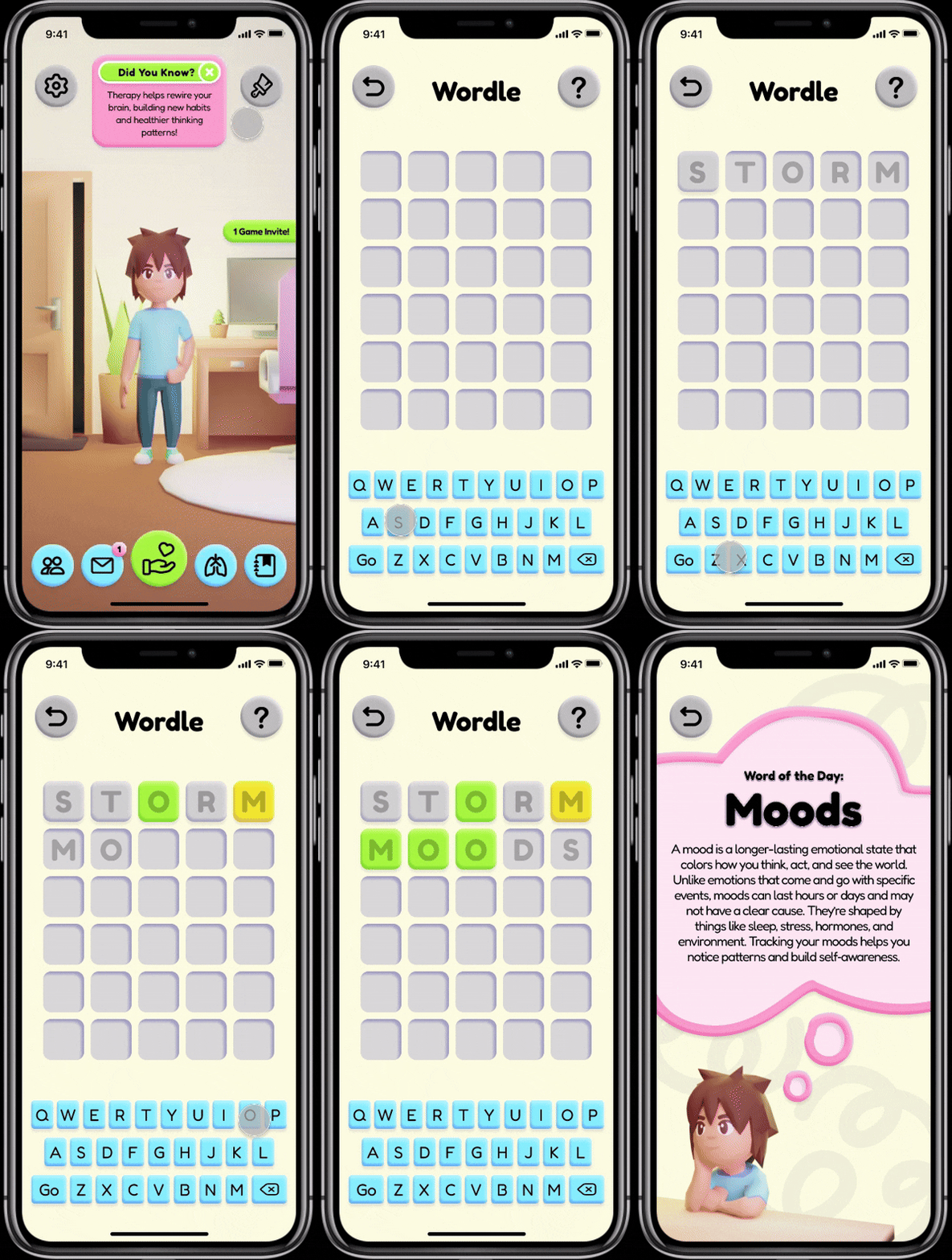
During calmer moments, users can play wellness-focused mini-games like our Wellness Wordle, which incorporates mental health vocabulary and positive affirmations through familiar gameplay. The goal of the Wellness Wordle feature is to provide a calming activity that still reinforces positive mental health language. By combining familiar gameplay with affirmations and supportive vocabulary, the feature encourages users to engage with emotional wellness in a low-stress and approachable way.
Based on our research, we recognized that users may not always want direct therapeutic interaction during stressful moments. Some users prefer lighter activities that help them decompress. This feature offers a low-pressure way for users to decompress while still engaging with positive mental health language.
therapy chat prototype
We designed a prototype for one of the most important parts of our app: direct support from real mental health professionals.

In our prototype for Cozy Corner’s real-time mental health chat, we focused on creating support that feels immediate, intuitive, and comforting, while still maintaining the playful aesthetics of a video game world.
1. Instant, anonymous access to licensed professionals
Users can connect with a real mental health professional within seconds — no scheduling, no forms, no barriers. This ensures they receive support exactly when emotional intensity is highest.
2. Interactive tools to guide emotional processing
On the counselor’s side, we integrated interactive elements like a 1–10 emotion scale to help users communicate how they feel quickly and clearly. These tools support smoother and more structured conversations while reducing the cognitive load on users who may struggle to articulate their emotions.
3. Intuitive chat mechanics with a video-game twist
The chat interface blends familiar messaging patterns with gentle game-inspired visuals, keeping the experience warm and approachable. This helps users feel safe and engaged without the clinical tone of traditional therapy platforms.
reflection
Through building this app and leading both a business analyst and another UX designer, I learned how essential strong collaboration is, especially when working in unfamiliar territory. This was my first time stepping into a product manager role, which pushed me to understand not only design decisions but also the business implications behind them. Even though my business knowledge was initially the weaker side, I was able to rely on my teammate’s strengths while bringing my own design and research expertise into the process. Together, we shaped features that were grounded in business strategy yet still empathetic to users navigating mental health challenges. It has always been a dream of mine to integrate mental health support into video games. I see games as one of the most engaging and interactive digital mediums—full of potential to address gaps that exist in traditional mental health tools. While this project was developed over a few weeks during the Business Tech+ Jam, it has become a real product I’m truly excited to build. I hope to further develop the app, expand its features, and bring this idea closer to reality.